

NEWS
When quiet performance matters, knowing How to select Deep Groove Ball Bearings for low noise? can make a major difference in machine efficiency, comfort, and product quality. From precision grades and internal clearance to lubrication and cage design, comparing these bearings requires more than checking dimensions. This guide explains the key factors that help you choose the right option for smoother, quieter operation.
Why do some deep groove ball bearings run quieter than others?
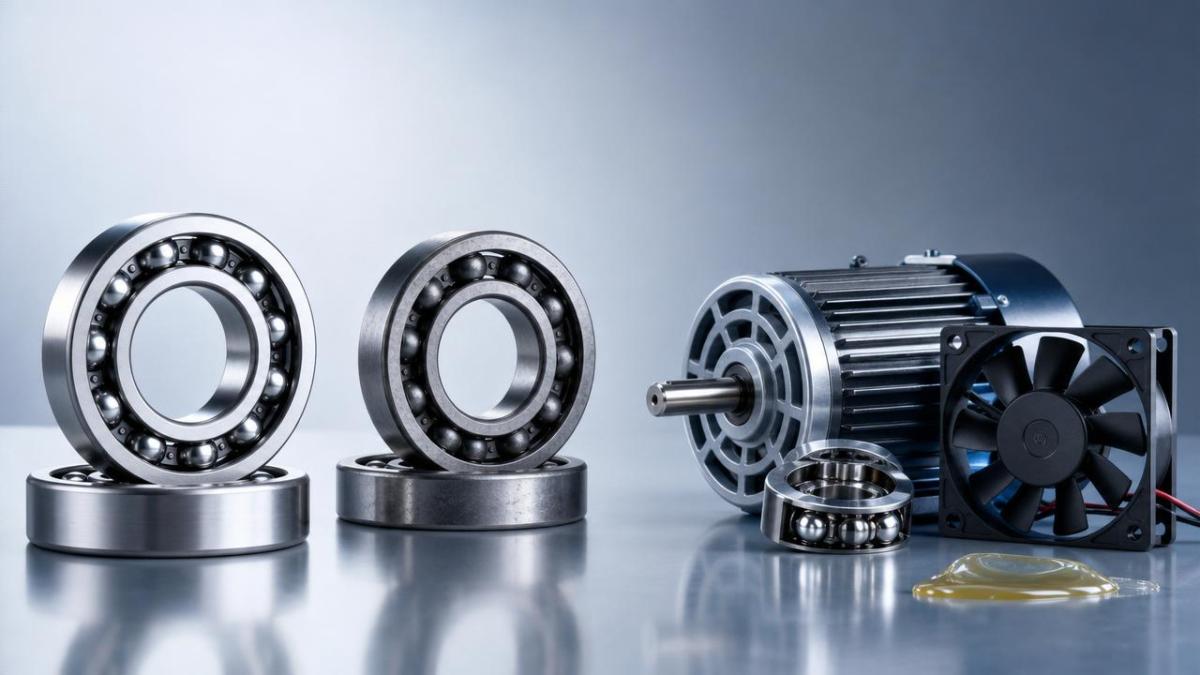
Low-noise performance is not determined by one specification alone. Two bearings with the same bore, outer diameter, and load rating can behave very differently once installed in a motor, fan, pump, office machine, or household appliance.
If you need to compare options for quiet use, start by looking beyond catalog dimensions. Raceway accuracy, ball roundness, cage stability, grease behavior, clearance control, and mounting quality all influence vibration and sound.
This is why buyers asking How to select Deep Groove Ball Bearings for low noise? often face confusion. A lower price may look attractive at first, but unstable noise levels can lead to product complaints, extra inspection, and repeated replacement.
- Precision of rings and balls affects rotational smoothness and the consistency of contact inside the bearing.
- Internal clearance influences vibration, running temperature, and the way load is distributed at speed.
- Lubrication type and fill quantity can either damp noise or create drag, churning, and acoustic instability.
- Cage material and design can reduce friction and improve ball guidance, especially in high-speed light-load applications.
How to compare key technical factors for quiet operation
When evaluating deep groove ball bearings for low-noise equipment, it helps to compare the main selection factors side by side. The table below highlights what purchasers, engineers, and quality teams should review before approving a bearing for quiet use.
This comparison shows why How to select Deep Groove Ball Bearings for low noise? cannot be answered by part number alone. Quiet running depends on how the full bearing system behaves in the actual machine, not only on nominal specifications.
Precision grade and vibration control
For quiet applications, buyers often focus on ABEC or ISO accuracy classes, but acoustic performance also depends on surface waviness and ball consistency. A bearing may meet a formal grade while still showing vibration characteristics that are unsuitable for sensitive products.
In electric motors, ventilation units, and small drives, low vibration is often more important than simply using a higher nominal precision class. Ask suppliers how they control raceway finish, ball lot consistency, and final noise screening.
Internal clearance and fit selection
Internal clearance must be chosen with the full assembly in mind. Interference fits on the shaft or in the housing reduce operating clearance. Thermal expansion during service reduces it further, which can increase friction and sound.
At the same time, excessive clearance can produce unstable running and greater vibration. The quietest option is often a carefully controlled clearance value matched to speed, preload conditions, and temperature rather than a generic normal class.
Lubrication as a noise factor
Grease is frequently overlooked when users ask How to select Deep Groove Ball Bearings for low noise? Yet lubrication strongly affects startup feel, running sound, temperature, and service life. Even a well-made bearing can become noisy if the grease is too thick, too thin, overfilled, or contaminated.
For quiet equipment, grease should provide stable film formation and damping without creating excess churning. Cleanliness matters as much as chemistry. Fine contamination particles often show up first as noise before visible damage appears.
Which deep groove ball bearing features matter most in different applications?
Quiet-use requirements vary by machine type. A bearing chosen for a home appliance does not always suit a medical fan, precision motor, or office device. Comparing application conditions helps avoid overbuying in one area and under-specifying in another.
The table below maps typical quiet-use scenarios to the bearing characteristics that deserve the most attention during selection and supplier discussions.
Application-based comparison helps teams decide what really matters. In some cases, improved grease and clearance control deliver more acoustic benefit than moving to a much higher-cost precision grade.
Open, shielded, or sealed bearings
The closure type also affects sound. Shielded bearings often balance protection and low drag well in clean environments. Sealed bearings improve contamination control, which can protect quiet operation over time, but seal contact may slightly affect torque and noise behavior depending on design.
Open bearings may perform very quietly in controlled assembly conditions, yet they are more vulnerable to contamination during handling and service. For many buyers, long-term acoustic consistency matters more than initial test-bench results.
How to select Deep Groove Ball Bearings for low noise during procurement
Procurement teams often receive limited information: drawing size, speed, and rough load. That is rarely enough for low-noise selection. A better process reduces risk before mass purchase and helps align engineering, quality, and sourcing goals.
- Define the real noise target. Decide whether the concern is vibration level, airborne sound, startup noise, or user-perceived comfort.
- Confirm operating conditions. Record speed, radial and axial load, fit tolerances, temperature, duty cycle, and contamination exposure.
- Identify assembly influences. Shaft roundness, housing rigidity, mounting method, and preload conditions can amplify or mask bearing noise.
- Request targeted samples. Ask for bearings prepared for quiet use, with declared grease type, clearance class, and closure configuration.
- Test in the actual product. Bench tests are useful, but true comparison should happen in the complete machine at working speed.
- Review supply stability. Quiet performance loses value if batch consistency, packaging cleanliness, or lead time cannot be maintained.
This method gives a more reliable answer to How to select Deep Groove Ball Bearings for low noise? than choosing only by price or brand familiarity. It turns selection into a controlled engineering decision instead of a trial-and-error purchase.
Questions worth asking a supplier
- Can you provide recommended clearance and grease based on our speed and fit conditions?
- Do you sort or inspect bearings according to vibration or noise characteristics?
- What closure type is most suitable for our contamination level and torque limit?
- Can sample lots be matched to future production specifications to reduce approval-to-mass-production variation?
- What packaging and handling controls are used to prevent contamination before assembly?
What common mistakes increase bearing noise?
Even a suitable bearing can become noisy if the surrounding process is weak. Many noise complaints come from avoidable mistakes in fitting, storage, lubrication, or expectations.
Mistake 1: choosing by size only
A matching dimension does not guarantee quiet operation. Buyers who ignore clearance, grease, cage, and closure type often discover that the installed sound is inconsistent across batches.
Mistake 2: ignoring shaft and housing quality
Poor shaft finish, out-of-round housings, or inaccurate seats can distort the rings and generate vibration. In these cases, replacing the bearing alone may not solve the noise issue.
Mistake 3: overfilling grease
More grease is not always safer. Excess grease can increase drag, heat, and churning noise, especially at moderate to high speeds. Controlled fill is usually better than maximum fill.
Mistake 4: skipping sample validation
Quiet-use bearings should be validated in the real product. Acoustic behavior changes with bracket stiffness, motor balance, fan blades, and operating temperature. Sample checks reduce mass-production risk.
FAQ: practical answers for low-noise bearing selection
Are higher precision grades always quieter?
Not always. Higher precision often helps, but low noise also depends on raceway quality, lubrication, clearance, fits, and machine structure. In some products, better grease control and cleaner assembly deliver more noticeable acoustic improvement than a higher formal grade.
Which clearance is best for quiet use?
There is no universal answer. The best clearance depends on shaft interference, housing fit, speed, and operating temperature. Normal clearance may work well in one motor, while a controlled smaller or larger value may be better in another assembly.
Should I choose sealed or shielded deep groove ball bearings?
Choose based on environment and torque limits. Sealed bearings help keep out contamination and maintain long-term quietness. Shielded versions may offer lower drag in cleaner environments. The right choice depends on how dirty the application is and how sensitive it is to rotational resistance.
How can I compare suppliers for quiet-use bearings?
Compare them on technical communication, sample consistency, vibration control, lubrication recommendations, packaging cleanliness, and batch stability. Price matters, but for quiet-use products, stable performance and fewer field complaints often create the better total value.
Why choose us for deep groove ball bearing selection support?
If your team is evaluating How to select Deep Groove Ball Bearings for low noise?, practical support matters more than generic catalog advice. We focus on helping buyers and engineers narrow down suitable options based on real operating conditions and procurement priorities.
- We can discuss key parameters such as speed, fit, clearance, lubrication, closure type, and expected acoustic performance.
- We can help compare selection paths for cost-sensitive projects, performance-sensitive products, and applications with complex noise requirements.
- We can support sample evaluation planning so your team can verify bearing behavior in the actual machine rather than relying only on catalog assumptions.
- We can communicate about lead time, packaging expectations, application matching, and quotation details before volume purchasing begins.
Contact us if you want support with parameter confirmation, low-noise bearing selection, sample arrangement, delivery planning, or quotation comparison. A clear technical discussion at the start can save time, reduce approval risk, and help you choose a deep groove ball bearing that runs more quietly in real service.
Awesome! Share to:


Get in Touch
*We respect your confidentiality and all information are protected.