

NEWS
Why does a Cylindrical Roller Bearing matter in heavy-duty equipment?
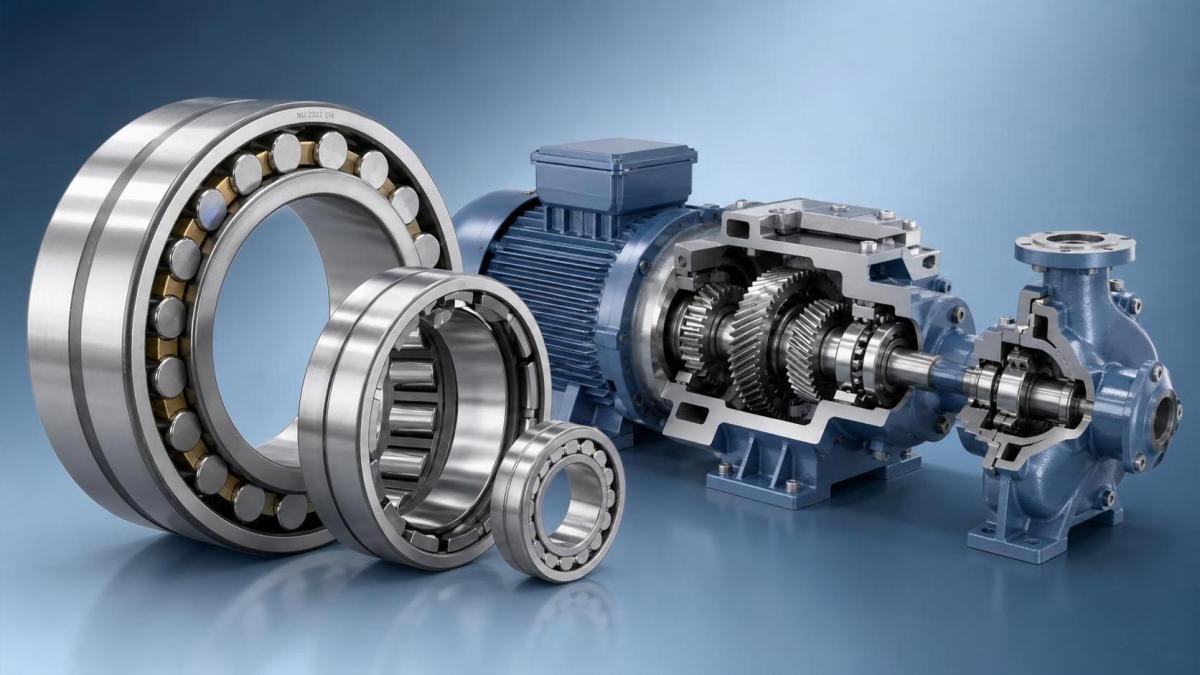
A Cylindrical Roller Bearing is built for one job above all: carrying high radial load without sacrificing speed.
That sounds simple, yet it explains why this bearing appears in gearboxes, electric motors, pumps, machine tools, and rolling mills.
In practical terms, the rolling elements are cylinders rather than balls. This creates a larger contact area with the raceway.
Because of that geometry, a Cylindrical Roller Bearing usually supports heavier radial loads than many ball bearing designs.
It also performs well where stiffness matters. Less elastic deformation can help equipment run more accurately under pressure.
Another reason it matters is speed. Many designs can operate at relatively high rotational speeds when lubrication and fits are correct.
So the appeal is not only strength. It is the balance of load capacity, operating speed, and durability in demanding conditions.
If a machine mainly sees radial force, repeated duty, and strict uptime requirements, this bearing often enters the discussion early.
What exactly makes it different from other bearing types?
The easiest comparison is against deep groove ball bearings. Ball bearings are versatile, efficient, and widely used.
A Cylindrical Roller Bearing, however, is usually the better fit when radial load becomes the dominant design concern.
The difference is not only shape. Internal design also changes how the bearing handles axial movement and mounting conditions.
Some cylindrical roller types allow axial displacement between shaft and housing. That helps when thermal expansion must be accommodated.
This is one reason engineers use them in motors and gearboxes that experience temperature swings during operation.
They are not the universal answer, though. Many versions are limited in axial load capacity compared with angular contact or tapered designs.
That is where selection becomes more nuanced. The best bearing depends on force direction, speed, alignment, lubrication, and service environment.
That comparison also explains why nearby product options can look similar but serve different load strategies.
For example, a tapered solution such as Stainless Steel Chrome Steel Taper Roller Bearing 10x32x17 is more relevant when axial load is part of the equation.
When should you actually choose a Cylindrical Roller Bearing?
A good rule is to start with the load path. If the machine mainly generates radial force, this bearing deserves attention.
That includes shafts loaded by belts, gears, rotating drums, or process forces pressing sideways against the shaft axis.
It is also a strong candidate when speed remains high but the application still demands more capacity than a ball bearing can comfortably provide.
Common situations include:
- Electric motors that need low friction, high reliability, and thermal expansion accommodation.
- Industrial gearboxes where radial loads from meshing gears are continuous and significant.
- Machine tool spindles or support assemblies requiring running accuracy and rigidity.
- Rolling mills, conveyors, and heavy process lines exposed to shock or sustained load.
Another sign is service life pressure. When downtime is expensive, a better-matched bearing often pays back through stability rather than headline cost.
Still, selection should not stop at catalog load ratings. Housing tolerance, shaft fit, lubrication method, and contamination control all matter.
In real applications, the right Cylindrical Roller Bearing is usually chosen as part of the whole support arrangement, not in isolation.
What should you check before deciding it is the right fit?
This is where many selection mistakes happen. The bearing may be strong enough on paper but unsuitable in the real operating context.
A practical review should cover several points before finalizing a Cylindrical Roller Bearing choice.
- Load direction: confirm that radial load is dominant and axial load is limited or managed elsewhere.
- Speed range: compare actual RPM with lubrication method and heat generation limits.
- Alignment quality: cylindrical roller designs are less forgiving of misalignment than some alternatives.
- Thermal behavior: decide whether axial displacement inside the bearing is necessary.
- Contamination risk: dust, metal particles, and water can quickly shorten bearing life.
- Mounting accuracy: improper fits or handling can damage raceways before the machine even starts.
It is also wise to review the broader arrangement. One position may use a Cylindrical Roller Bearing, while another uses a different type.
That mixed strategy is common because one bearing can locate the shaft axially, while the other allows controlled expansion.
If combined loads are more severe than expected, comparing it with a tapered option becomes important.
In those cases, even a compact reference like Stainless Steel Chrome Steel Taper Roller Bearing 10x32x17 helps illustrate how load direction changes bearing choice.
Are there common mistakes or misconceptions to avoid?
Yes, and most are not about the bearing itself. They come from assuming higher load capacity solves every reliability problem.
One common mistake is ignoring axial load. A Cylindrical Roller Bearing may excel radially yet struggle if thrust forces are underestimated.
Another mistake is overlooking misalignment. If the shaft or housing deflects, edge stress can rise and shorten service life.
Lubrication errors are also frequent. Too little grease is risky, but over-greasing can raise temperature and churning losses.
Contamination deserves equal attention. Fine particles can damage raceways long before failure becomes visible from outside.
There is also a cost misconception. A cheaper bearing that fails early is rarely the lower-cost decision in operation.
So how do you make a sensible final choice?
A sensible choice starts with clarity, not brand names or isolated catalog numbers.
Map the real loads, including peak conditions, startup behavior, shock, speed, and temperature variation.
Then check whether the support arrangement needs axial locating, axial freedom, or a combination of both.
If radial load is the main challenge, a Cylindrical Roller Bearing is often the cleanest answer.
If combined loads dominate, compare alternatives rather than forcing one design into the wrong job.
It also helps to review maintenance reality. Clean lubrication, seal quality, and installation discipline often decide the final outcome.
In short, use a Cylindrical Roller Bearing when you need strong radial capacity, solid speed performance, and dependable running under demanding service.
The next step is simple: list your load direction, RPM, axial movement needs, and environmental risks, then compare bearing types against those facts.
That process usually leads to a more reliable decision than choosing by size alone.
Awesome! Share to:


Get in Touch
*We respect your confidentiality and all information are protected.