

NEWS
Low-noise performance in bearings often depends on details buyers overlook, from raceway precision to lubrication quality and sealing design. If you are wondering How to select Deep Groove Ball Bearings for low noise?, the answer goes far beyond basic size and load ratings. Understanding these hidden factors can help you avoid vibration issues, improve equipment comfort, and choose bearings that deliver quieter, more reliable operation.
For buyers of motors, fans, pumps, office equipment, medical devices, and household appliances, noise is rarely caused by one factor alone. In most cases, 3 to 6 variables interact: internal geometry, steel cleanliness, cage stability, grease behavior, seal drag, shaft fit, and housing accuracy. A bearing that looks acceptable on paper can still create audible vibration after only 100 to 300 operating hours if these details are ignored.
This article explains what is easy to miss when choosing low-noise bearings, with a practical focus on deep groove ball bearings. It is written for procurement teams, engineers, OEM buyers, and maintenance decision-makers who need quiet operation, repeatable quality, and lower risk during sourcing.
Why Low-Noise Bearing Selection Is More Complex Than Basic Catalog Data
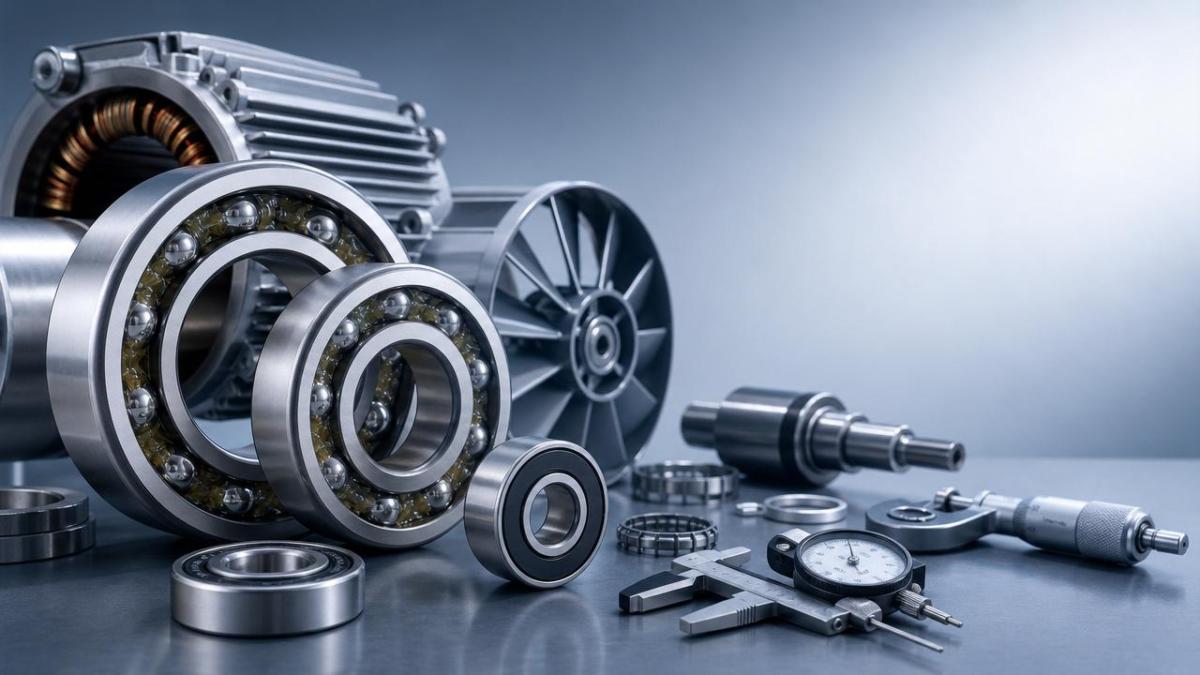
Many buyers begin with bore size, outer diameter, width, load rating, and speed limit. These are necessary, but they do not tell the full story. Two deep groove ball bearings with the same 6203 size can behave very differently in a 3,000 rpm motor if one has better raceway waviness control, tighter radial clearance consistency, and more stable grease distribution.
When asking How to select Deep Groove Ball Bearings for low noise?, it helps to think in terms of vibration sources. In low-noise applications, even small deviations measured in microns can become audible, especially in lightweight housings, plastic frames, or thin-wall motor covers that amplify resonance.
The 4 hidden contributors buyers often miss
- Raceway waviness and surface finish, which affect rolling smoothness and high-frequency sound.
- Lubricant type, fill quantity, and oil separation stability over 1,000 to 5,000 hours.
- Cage design and cage-pocket consistency, which influence ball guidance at medium and high speed.
- Fit and assembly conditions, including shaft roundness, housing tolerance, and preload behavior.
Why low-noise requirements vary by application
A ventilation fan and a small medical drive may both use deep groove ball bearings, but their acceptance thresholds are different. In home appliances, buyers may tolerate low background sound if service life exceeds 10,000 hours. In precision office machines or compact motors, even slight tonal noise can be unacceptable because users notice it at a distance of 1 to 2 meters.
This means low-noise bearing selection should always start with a use-case definition: operating speed, temperature range, expected life, acoustic sensitivity, mounting method, and duty cycle. Without this, buyers may pay for unnecessary precision in one area while missing a more important risk in another.
A practical rule for B2B buyers
If your equipment operates above 1,800 rpm, runs longer than 8 hours per day, or is installed in user-facing environments, low-noise criteria should be specified during sourcing rather than after field complaints appear. Corrective action later usually costs more than preventive evaluation during sample approval.
Key Technical Factors That Determine Quiet Performance
To answer How to select Deep Groove Ball Bearings for low noise?, buyers should evaluate at least 6 technical dimensions instead of relying on a single quality label. Quiet running depends on consistency across materials, geometry, lubrication, and sealing, not just one premium feature.
1. Raceway precision and waviness control
Roundness and waviness directly influence vibration. In low-noise bearing applications, raceway deviations at micro level can generate repetitive frequencies that become audible through the machine structure. Bearings produced for general industrial use may meet normal dimensional standards while still lacking the smoothness needed for quiet motors or fans.
Ask suppliers how they control raceway grinding, superfinishing, and vibration inspection. If they only provide standard dimensional tolerance but cannot discuss waviness, roughness, or running noise grading, that is a warning sign for noise-sensitive use.
2. Internal radial clearance selection
Clearance affects both vibration and heat. Too much internal clearance can increase ball movement and noise, while too little can create preload after fitting, raising friction and sound. In many low-noise electric motor applications, normal clearance or carefully selected C3 is used depending on shaft interference, speed, and temperature rise.
A difference of only a few microns may change operating feel significantly. Buyers should review the complete fit condition instead of requesting clearance grade by habit. The wrong clearance choice is one of the most common causes of unexpected tonal noise after assembly.
3. Steel cleanliness and ball quality
Non-metallic inclusions, ball lot variation, and poor hardness consistency can increase vibration over time. In low-noise deep groove ball bearings, smoother rolling elements and cleaner bearing steel support more stable noise behavior throughout service life, not just during initial testing.
This matters when the machine runs continuously for 2,000 to 10,000 hours. A bearing that is quiet at startup but becomes rough after grease migration or surface stress buildup can create warranty risk for OEM buyers.
The table below shows the technical factors that most often separate standard bearings from options better suited to low-noise operation.
The main takeaway is that low noise is a system outcome. Even a well-made bearing can become noisy if grease, clearance, or mounting conditions are mismatched. Buyers should therefore request both product data and application context review before final approval.
4. Grease type and fill quantity
Lubrication is one of the most overlooked issues in quiet bearing design. Grease that is too stiff can raise startup torque and create drag noise. Grease that is too soft or overfilled may churn, heat up, and lose consistency. In many compact bearing applications, fill quantity often falls in a moderate range rather than maximum fill.
For low-noise deep groove ball bearings, the supplier should understand speed factor, operating temperature, and life target. Grease chosen for high-speed spindle behavior is not automatically correct for a 24-hour fan motor, and vice versa.
5. Seal or shield design
Sealing design affects contamination resistance and acoustic behavior. Metal shields generally reduce drag, while contact rubber seals improve dust protection but may add friction. For equipment operating in cleaner environments, a shielded structure may support lower running sound. In dusty conditions, a light-contact seal may be the better compromise over a 12 to 36 month service period.
Seal lip consistency also matters. Uneven seal contact can create irregular friction sound that buyers may misdiagnose as internal bearing damage.
6. Cage material and guidance behavior
Pressed steel cages are common, but not every cage behaves the same in low-noise service. Pocket geometry, surface smoothness, and cage stability under speed all influence acoustic performance. In some applications, polymer cages may help reduce certain vibration characteristics, but the final choice depends on temperature, lubricant compatibility, and rotational speed.
Common Purchasing Mistakes When Selecting Low-Noise Deep Groove Ball Bearings
Many sourcing problems do not come from choosing the wrong bearing type. They come from incomplete purchasing criteria. Buyers often compare quotation sheets line by line, but fail to compare the process controls behind those numbers. That is why low-noise issues frequently appear after pilot production rather than during supplier negotiation.
Mistake 1: Assuming ABEC or general precision alone guarantees low noise
Dimensional precision is important, but low noise also depends on vibration grading, raceway finish, ball matching, and grease stability. A bearing can have acceptable dimensional accuracy yet still produce noise under light load or medium speed if internal running quality is inconsistent.
Mistake 2: Ignoring assembly and fit conditions
If shaft roundness, housing bore accuracy, or press-fit force are poorly controlled, even a good low-noise bearing can become noisy. In many motor and fan assemblies, interference fit, housing distortion, and rotor imbalance are responsible for a large share of acoustic complaints.
A practical review should include at least 5 checks: shaft tolerance, housing tolerance, shoulder squareness, installation method, and axial preload condition. Leaving these items undefined weakens the value of a premium bearing.
Mistake 3: Choosing purely by price per piece
The apparent unit saving may disappear if a lower-cost bearing causes 2% to 5% extra rejection, field returns, or rework during balancing and acoustic testing. For OEM projects, the real cost should include incoming inspection, assembly yield, warranty exposure, and customer perception.
The comparison below can help procurement teams separate low upfront price from low lifecycle risk when evaluating bearing offers.
This comparison shows why low-noise bearing sourcing should involve both purchasing and engineering. A bearing quote that looks competitive may still carry hidden costs if process capability and application matching are unclear.
Mistake 4: No clear acceptance criteria during sampling
If the sample stage does not define test speed, radial load, temperature, grease condition, and noise limits, approval becomes subjective. A more reliable method is to use 3 stages: incoming sample inspection, mounted running test, and pilot batch verification. This reduces the chance of approving a bearing that performs well only in loose, unloaded rotation.
How to Select Deep Groove Ball Bearings for Low Noise in a Practical Sourcing Process
A structured process makes bearing selection more predictable. Instead of asking only for a low-noise model, buyers should provide the operating window and validate performance step by step. This is the most practical answer to How to select Deep Groove Ball Bearings for low noise? in real purchasing work.
Step 1: Define the operating profile
List 6 key inputs before requesting samples: speed range, load condition, service life target, temperature range, contamination level, and installation orientation. For example, a bearing running at 2,800 rpm in a small axial fan needs a different lubricant and seal balance than one running at 900 rpm in office automation equipment.
Step 2: Specify low-noise priorities
Decide whether your first priority is minimum acoustic output, stable long-term sound, low starting torque, or dust resistance with acceptable noise. Not every target can be optimized equally. A contact seal may improve contamination protection while adding slight drag. A lighter grease may lower startup sound but may not suit every temperature profile.
Step 3: Ask suppliers the right technical questions
- How is vibration or running noise controlled during production?
- What grease family and fill strategy are used for low-noise service?
- What clearance options are recommended for the intended fit and speed?
- What seal or shield structure is most suitable for the application environment?
- How is lot-to-lot consistency managed during mass production?
What strong suppliers usually provide
Reliable suppliers can normally discuss application matching, not just catalog data. They can explain why one seal type is better than another, why a certain grease fill supports lower noise, and how fit conditions influence final performance. This practical dialogue is often more valuable than broad quality claims.
Step 4: Validate with mounted testing, not hand feel alone
Hand rotation checks may detect severe roughness, but they cannot predict behavior at full operating speed. Sample testing should be done in the real or simulated assembly, ideally over several start-stop cycles and sustained running periods such as 30 minutes, 2 hours, and extended life checks where relevant.
Step 5: Protect low-noise performance during installation
Even the best low-noise deep groove ball bearings can be damaged by poor handling. Improper pressing force, contamination during assembly, or misaligned housing bores can introduce noise immediately. In many factories, simple improvements such as clean gloves, dedicated mounting tools, and fit verification reduce post-assembly noise complaints within the first production batches.
Recommended Checks Before Final Purchase Approval
Before converting a sample into a production order, buyers should use a short but disciplined review checklist. This helps turn a low-noise bearing requirement into a repeatable purchasing standard rather than a one-time test result.
A 6-point approval checklist
- Confirm application speed, load, and temperature range in writing.
- Verify clearance, seal type, and grease selection against the real assembly.
- Check shaft and housing tolerances before blaming the bearing for noise.
- Run sample validation under mounted conditions, not loose-spin inspection only.
- Review consistency expectations for pilot lot and production lot.
- Define acceptance criteria for sound, vibration, torque, and visual cleanliness.
Who benefits most from this approach
This method is especially useful for OEMs and component buyers in motors, fans, pumps, medical drives, office equipment, and home appliances. If your product is compact, runs continuously, or is used close to people, better low-noise bearing selection can improve user comfort, reduce after-sales complaints, and protect brand perception.
Choosing a quiet bearing is not about finding a single magic specification. It is about matching deep groove ball bearing design, lubrication, sealing, internal clearance, and installation conditions to the actual duty cycle. Buyers who look beyond basic dimensions and load ratings usually achieve more stable acoustic performance and lower sourcing risk over time.
If you are evaluating options and need clearer guidance on How to select Deep Groove Ball Bearings for low noise?, now is the right time to compare your application requirements with a more detailed technical checklist. Contact us to discuss your operating conditions, request a tailored selection suggestion, or learn more solutions for low-noise bearing sourcing.
Awesome! Share to:


Get in Touch
*We respect your confidentiality and all information are protected.